280ZX Stator Magnet Checker: Intent Routing, Risk Boundaries, and Action Guide
Run the tool first to separate distributor-magnet replacement intent from charging-system diagnosis, then use the report layer to make a source-backed next-step decision on one URL.
Evidence trust signals
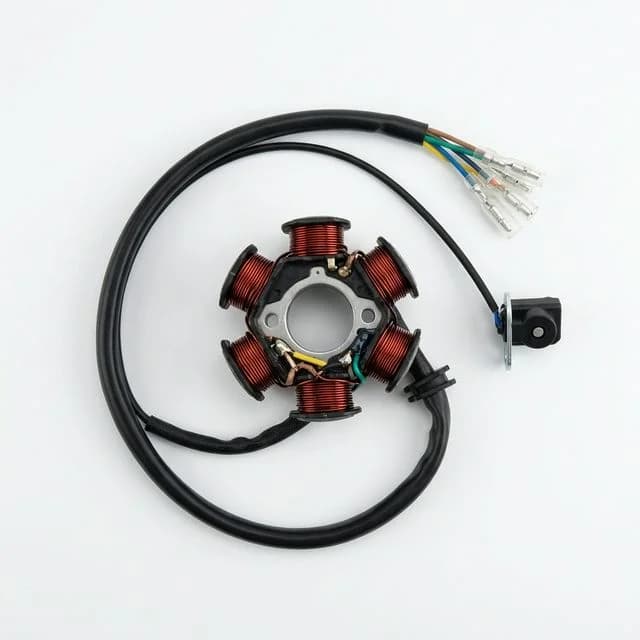
Report summary: conclusions, key numbers, fit boundaries
This layer explains why the checker output is trustworthy enough for triage and where final certainty still depends on model-level documentation.
Primary intent fit
Tool routes distributor vs charging first, then applies evidence weighting
Designed for immediate do-intent plus deeper know-intent in a single page flow.
Core numeric anchors
13-15 V @1,500 rpm, 14.4-15.0 V, >50 A @2,500 rpm, 0.057 ohm @20C
Anchors are sourced from the 1982 EL chapter and remain context-bound screening values.
Evidence mix
OEM manual + official Nissan parts + catalog mirror + instrument makers + regulators
Community sources stay supplemental and do not drive pass/fail boundaries.
Main boundary
VIN-level supersession and fitment gaps remain open
When evidence conflicts, page enforces conservative actions and marks unresolved items as pending confirmation.
| Gap found | Decision risk if not fixed | Round action | Status |
|---|---|---|---|
| Official OEM lifecycle evidence was under-used in core conclusions | Users could buy the wrong part family and still fail to solve no-start or no-charge symptoms. | Added Nissan USA official parts endpoint evidence for 22158-S6700 (discontinued + no fitment data) and tied it to action/risk sections. | Closed in round 2 |
| Component-boundary terms were still easy to confuse | Users could misread distributor components as alternator parts and order incompatible hardware. | Added component boundary map separating 22158-S6700 Magnet Assy, 22163-Q1700 Stator, and alternator stator windings. | Closed in round 2 |
| Turbo/non-turbo fitment boundaries were not explicit enough in the tool layer | Searchers could miss discontinued-status risk or buy incompatible replacement stock. | Added engine-variant input and route-specific boundary notes backed by 1982 parts listing differences (L28E vs L28ET distributor assemblies). | Closed in round 2 |
| Metrology and supply-chain risk evidence lacked high-authority external support | Weak sourcing can hide both low-ohm measurement error and counterfeit-part safety exposure. | Added Fluke + Keysight low-ohm method evidence and NHTSA/USTR safety-risk evidence for counterfeit replacement decisions. | Closed in round 2 |
| Topic | Current evidence status | Minimum next step |
|---|---|---|
| Open-public Nissan service bulletin explicitly using the phrase "stator magnet" for S130 | As of April 13, 2026, publicly indexed OEM documents describe charging-system alternator checks and distributor assemblies, but not a single unified "stator magnet" diagnostic bulletin. | Keep intent-split workflow and force manual confirmation against vehicle-specific service documentation. |
| VIN-level supersession map for 22158-S6700 in open public endpoints | Official Nissan endpoint shows discontinued status but no fitment rows, while catalog mirrors provide partial variant context rather than VIN-resolved supersession. | Treat fitment as conditional and require VIN-era + distributor ID confirmation before order approval. |
| Open-public benchmark band for alternator AC VAC under modern replacement alternators | FSM gives period-correct electrical specs, but broad public datasets for rebuilt/aftermarket 280ZX alternator AC behavior are inconsistent. | Keep AC VAC as screening only and require model-specific bench validation when readings sit near decision boundaries. |
| Observed pattern | Evidence | Page decision |
|---|---|---|
| Official Nissan parts endpoint shows lifecycle stop + missing fitment table | Nissan USA parts page for 22158-S6700 marks the item as discontinued and shows no vehicle-fitment rows. | Any purchase recommendation must include explicit variant verification instead of title-only ordering. |
| 1982 FSM provides condition-bound charging anchors | EL section includes 1,500-rpm B-terminal check markers (13-15 V and >15.5 V branch), 14.4-15.0 V regulated output, >50 A hot output at 2,500 rpm, and 20C resistance references. | Thresholds should remain screening values with explicit RPM/temperature conditions on the page. |
| Component names collide across distributor and alternator contexts | 1982 distributor listing contains Magnet Assy (22158-S6700), Stator (22163-Q1700), Pickup Kit, and engine-variant distributor assemblies. | Hybrid page must surface a component-boundary map so users do not confuse similarly named parts. |
| Safety agencies report severe failures from counterfeit auto safety parts | NHTSA 2024 alert and USTR 2023 report both document high-impact counterfeit part failures (including non-deployment and shrapnel events). | Risk layer must include provenance and supplier-verification actions when OEM parts are discontinued. |
| Metric | Screening band | Decision reason | Source |
|---|---|---|---|
| Charging-screen marker (EL-20, 1,500 rpm) | 13 to 15 V expected | Separates plausible charging operation from immediate under/overcharge escalation cases. | S1 |
| High-side chart marker (EL-20) | More than 15.5 V = review/escalation gate | Keeps overcharge-path checks visible before users commit to distributor-only repair actions. | S1 |
| Regulated output specification | 14.4-15.0 V | Tighter reference helps interpret borderline readings in charging-path troubleshooting. | S1 |
| Hot output current reference | More than 50 A at 2,500 rpm | Adds current-delivery boundary so acceptable voltage does not hide weak alternator output under load. | S1 |
| Alternator rotor resistance (20C) | 3.8 ohm reference | Anchors internal alternator checks and prevents subsystem confusion. | S1 |
| Alternator stator resistance per phase (20C) | 0.057 ohm reference | Very low-ohm measurement requires lead compensation to avoid false defect calls. | S1 |
| Low-ohm measurement boundary | Lead resistance can be ~0.3 ohm; use REL and consider 4-wire methods | At very low ohms, metrology error can be larger than DUT resistance unless lead error is actively removed. | S4, S5 |
| OEM lifecycle + fitment availability | 22158-S6700 listed as discontinued; fitment table unavailable | Discontinued/no-fitment state requires conservative procurement decisions and stronger verification. | S2 |
| Distributor component distinction | 22158-S6700 Magnet Assy vs 22163-Q1700 Stator vs 22229-Q1700 Pickup Kit | Separates similarly named distributor components so users do not mis-route repairs. | S3 |
| Search term/component label | Actual component | Subsystem | Use when | Confusion risk | Source |
|---|---|---|---|---|---|
| 22158-S6700 Magnet Assy | Distributor magnet assembly | Ignition / distributor | Distributor pickup-magnet failure or brittle-magnet symptoms are confirmed | Often misread as alternator stator hardware because of keyword overlap. | S2, S3 |
| 22163-Q1700 Stator | Distributor stator element | Ignition / distributor | Distributor-internal service where stator-specific wear/damage is identified | The word "stator" can be wrongly mapped to charging-system alternator windings. | S3 |
| Alternator stator winding (per phase) | Charging alternator winding | Charging system | No-charge or overcharge diagnostics with voltage/current/resistance checks from EL references | Treating this as a distributor-only issue can delay root-cause repair and add rework cost. | S1 |
| Engine context | Distributor examples | Decision boundary | Source |
|---|---|---|---|
| L28E (1982 listing) | 22100-P7106 / 22100-P7901 (Hitachi D6K8-03 / D6K80-03) | Do not assume turbo interchange even if search results look similar by title. | S3 |
| L28ET turbo (1982 listing) | 22100-P9000 (Hitachi D6P80-02) | Treat turbo configurations as separate fitment path before ordering magnet/distributor parts. | S3 |
| Unknown engine/distributor ID | Official Nissan endpoint shows no fitment rows for 22158-S6700 | Require VIN-era and distributor ID checks before approving any purchase. | S2, S3 |
| Audience | Fit | Why |
|---|---|---|
| 280ZX owner replacing distributor reluctor magnet | Good fit | Tool returns immediate routing, risk score, and next-step procurement checks. |
| Technician triaging no-charge complaints | Good fit | FSM-linked voltage and resistance boundaries support fast intake decisions. |
| User with low-fidelity measurements only | Partial fit | Usable for triage, but confidence becomes medium until continuity and compensated resistance checks are completed. |
| Buyer expecting new OEM stock only | Partial fit | Official discontinued status and missing fitment rows require fallback path plus variant verification. |
| Owner without engine/distributor identification | Partial fit | Checker provides a conservative route, but purchase approval stays blocked until variant evidence is collected. |
| User without subsystem classification | Not fit | Without identifying distributor vs alternator path, any recommendation stays conservative. |
| User expecting legal/compliance advice | Not fit | This page provides engineering screening only, not legal or warranty decisions. |
Methodology and evidence layer
The report layer exists to justify trust: what is measured, how verdicts are produced, and where evidence is thin.
| Step | What we do | Output |
|---|---|---|
| Input normalization | Collect intent, model family, engine variant, voltage readings, low-ohm values, continuity, and physical condition notes. | Validated numeric + categorical inputs |
| Intent routing | Prioritize distributor replacement flow or alternator diagnostic flow before any recommendation. | Route-specific weighting for verdict mapping |
| Measurement fidelity control | Apply lead-resistance compensation for low-ohm checks and mark uncertainty when compensation is absent, with Fluke/Keysight-backed boundary notes. | Measured vs effective resistance context |
| Source-weighted evidence merge | Prioritize OEM manual + official parts endpoint + regulator data, then use catalog/community sources as secondary context. | Conclusion confidence reflects source authority and contradiction handling |
| Boundary scoring | Evaluate charging bands, high-voltage trigger, resistance references, and hard-fault cues. | Risk score + pass/review status flags |
| Verdict mapping | Map score and hard triggers into distributor-first, charging-path, or stop-and-inspect states. | Interpreted verdict with confidence |
| Action path generation | Attach minimum executable next action and disclosure for each verdict state. | Actionable follow-up, not raw values only |
S1-S7 carry core threshold, fitment, metrology, and safety-risk logic for this page. S8-S9 remain context-only and never standalone pass/fail authority.
| ID | Source | Key data used | Confidence | Date context |
|---|---|---|---|---|
| S1 | 1982 Nissan 280ZX FSM, Electrical System (EL) chapter | EL-20/21/25 provides 1,500-rpm voltage markers, 14.4-15.0 V regulated output, >50 A at 2,500 rpm, and 20C rotor/stator resistance references. | High (OEM manual mirror) | 1982 document; extracted April 13, 2026 |
| S2 | Official Nissan USA parts store (22158-S6700) | Lists Magnet Assembly 22158-S6700 as discontinued with no fitment rows, creating a verification-first procurement boundary. | High (official OEM endpoint) | Accessed April 13, 2026 |
| S3 | 1982 Nissan 280ZX distributor/ignition parts listing | Separates 22158-S6700 Magnet Assy, 22163-Q1700 Stator, 22229-Q1700 Pickup Kit and shows L28E vs L28ET distributor assembly differences. | Medium-high (catalog mirror) | Accessed April 13, 2026 |
| S4 | Fluke application note: low-ohm measurements | States lead resistance can significantly distort very low-ohm readings and recommends REL/zero compensation. | Medium-high (instrument manufacturer) | Accessed April 13, 2026 |
| S5 | Keysight resistance measurement guidance | Recommends 4-wire/remote-sense methods when lead resistance is comparable to DUT resistance. | Medium-high (instrument manufacturer) | Accessed April 13, 2026 |
| S6 | NHTSA air bag safety page | Contains 2024 consumer alert details on fatalities/injuries linked to faulty aftermarket replacement inflators and warns about counterfeit non-deployment/shrapnel risk. | High (U.S. regulator) | Accessed April 13, 2026 |
| S7 | USTR 2023 Notorious Markets Report | Reports counterfeit auto-part safety failures (including counterfeit airbags/brakes) and documents enforcement/seizure context. | High (U.S. government report) | 2023 report; accessed April 13, 2026 |
| S8 | The Z Store product page (aftermarket context) | Lists distributor reluctor magnet for 79-83 280ZX non-turbo, useful for market-intent mapping but not OEM authority. | Medium | Accessed April 13, 2026 |
| S9 | ZCar forum thread (community context) | Shows user demand and failure anecdotes around distributor magnet replacement; kept as contextual signal only. | Low (community) | Thread date 2023; accessed April 13, 2026 |
Alternatives and tradeoffs
Comparison layer helps avoid a single-path bias after checker output.
| Option | Speed | Cost | Reliability outlook | When to use |
|---|---|---|---|---|
| Distributor magnet replacement only | Fast if stock is available | Low to medium | Medium | Use when symptoms and intent strongly match distributor pickup magnet failure. |
| Distributor rebuild / reman path | Medium to slow | Medium | Medium to high (depends on traceability) | Use when OEM supply is discontinued and donor/component quality can be documented. |
| Alternator charging diagnostics first | Medium | Medium | High | Use when measured voltage behavior is outside EL thresholds or no-charge symptoms dominate. |
| Blind title-match ordering from unknown channel | Fast | Low now, potentially high rework + safety exposure | Low | Not recommended; this is the primary failure mode for ambiguous "stator magnet" queries. |
| Variant-verified procurement path | Medium | Medium | High | Best when engine variant and distributor ID are confirmed and supplier provenance is traceable. |
| Full wiring + charging-path audit | Slow | Highest | Highest | Best for repeated failures, mixed no-start/no-charge symptoms, or undocumented modifications. |
| Scenario | Assumptions | Tool outcome | Minimum next step |
|---|---|---|---|
| Distributor replacement request with visible ring crack | Intent distributor, engine variant L28E, charging readings in-band, magnet marked hairline crack, harness clean. | distributor-first (score ~76-82) | Verify part lineage + supplier quality, then replace or rebuild distributor path. |
| No-charge complaint with high-voltage swing | Intent set to alternator charging stator, reading exceeds high-side threshold, magnet condition intact. | charging-path (score 58) | Run regulator/alternator diagnostics before any distributor-related purchase. |
| Low-ohm reading without compensation | Measured 0.09 ohm with 0.08-ohm leads and no REL compensation, charging near nominal. | charging-path (medium confidence) | Apply compensation and rerun before declaring alternator stator defect. |
| Turbo listing mismatch risk | Intent distributor, engine variant L28ET, user starts from non-turbo product listing title only. | distributor-first (medium confidence) | Pause ordering and validate distributor ID/variant mapping before any checkout decision. |
| Broken magnet fragments with unknown continuity | Intent distributor, magnet broken/missing, continuity not tested, harness not confirmed. | stop-and-inspect (score 36) | Stop-run, inspect distributor internals and related wiring, then rerun checks before restart. |
| Ambiguous keyword with mixed signals | Intent not sure, charging near low boundary, magnet not inspected, continuity missing. | charging-path (medium confidence) | Collect continuity + subsystem symptom evidence before part ordering. |
| Discontinued OEM part pushes buyer to unknown seller | User has minimal measurements and no provenance records for substitute parts. | charging-path or stop-and-inspect (medium confidence) | Complete minimum measurements, confirm variant, and require traceable supplier evidence before purchase. |
Risk matrix and mitigations
Misuse risk, cost risk, and scenario mismatch risk are mapped with concrete mitigation actions.
| Risk | Probability | Impact | Mitigation action | Trigger |
|---|---|---|---|---|
| Intent mismatch leads to wrong part family purchase | High | High | Require intent classification and at least one subsystem-specific measurement before order approval. | User proceeds with only keyword match |
| Low-ohm alternator measurements distorted by meter leads | High | Medium | Capture lead resistance, apply REL/zero compensation, and retest before declaring alternator stator failure. | Phase resistance near boundary with compensation = no |
| Missing continuity test hides hard fault | High | High | Block non-critical recommendations until continuity-to-ground status is confirmed. | Ground test marked "not tested" |
| Overcharge path ignored | Medium | High | Escalate regulator and alternator checks when readings exceed EL high-side threshold. | Charging reading above 15.5 V |
| Undercharging misattributed to battery only | High | Medium | Cross-check alternator-side values and harness condition before battery-only replacement decisions. | Charging reading below 13 V |
| Discontinued part availability drives low-quality substitutes | Medium | High | Verify supplier credibility, traceability, and fitment evidence before buying substitute components. | 22158-S6700 direct-order path selected |
| Counterfeit replacement part introduces safety-critical failure | Medium | High | Use traceable channels and reject unknown provenance; align risk decisions with NHTSA/USTR counterfeit alerts. | Discontinued OEM path + unverified seller/source |
| Catalog ambiguity across variants causes fitment mismatch | Medium | Medium | Bind order decisions to engine/distributor variant checks before purchase authorization. | Engine variant unknown or turbo/non-turbo context mixed |
| Harness heat damage ignored | Medium | Medium | Inspect connector heat marks and repair harness path before new stator install. | Harness condition = heat-damaged |
FAQ and conversion layer
Decision-focused FAQ first, then direct CTA and related internal routes.