
EVMotorMagnets logoEV Motor Magnets
  • About Factory
  • Blog Insights
  • Contact Inquiry
EVMotorMagnets logoEV Motor Magnets

China factory for EV and industrial motor magnets with OEM customization support

Products
  • EV Traction Motor Magnets
  • Axial Flux Generator Magnet Notes
  • Back-EMF Engineering Knowledge
Capabilities
  • OEM Customization
  • Prototype and Small-Batch
  • Quality and Traceability
  • FAQ
Resources
  • Learn Resources
  • Blog Insights
  • OEM Process
  • Contact Inquiry
Company
  • About Factory
  • Contact Inquiry
Legal
  • Cookie Policy
  • Privacy Policy
  • Terms of Service
© 2026 EV Motor Magnets. All Rights Reserved.
Tool-first page for keyword: 10 kw axial flux generator

10 kW Axial Flux Generator Checker:
input your stack, get boundary-aware output

This page is built for do-intent users who need a fast feasibility answer, not a generic product catalog. Enter your 10 kW assumptions, run the checker, and get interpreted output with risk boundaries and a concrete next action.

Published: April 6, 2026 | Evidence refresh: April 6, 2026 | Competitive scan date: April 6, 2026
Run 10 kW checkerexample scenariosassumptions and limitsdecision FAQ
Run checkerOpen next-step CTA
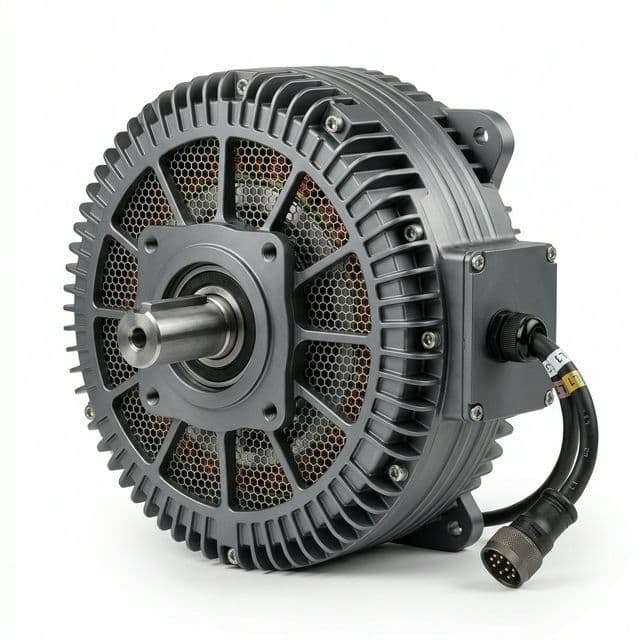
10 kW class axial flux generator assembly
Screen torque, current, frequency, and thermal margin before detailed modeling.
Aha preview before input
You will get torque/current/shear/thermal outputs plus a risk-banded verdict in one run.
RotorStatorRotor
Current baseline verdictfit
FIT (0-34)CAUTION (35-64)HIGH-RISK (65-100)
ToolFeaturesHow to useExamplesEvidenceFAQ
Input layer
Required fields are explicit. Defaults represent a realistic first-pass 10 kW concept and can be edited immediately.
Assumption boundary: this checker is deterministic and machine-level. It does not include turbine aerodynamic model, converter control detail, or structural FEA.
Output layer
Result includes interpretation, uncertainty, boundary notes, and next action CTA in the same block.
Empty state
Start with the defaults and run once. Then tweak one variable at a time for sensitivity checks.

Features and result interpretation

Key outputs are structured as cards and thresholds so teams can decide quickly without guessing what a number means.

Torque at rated speed

298.4 Nm

Derived from P = T * w using your declared power and rpm.

Estimated line current

17.4 A

Uses three-phase power relation with your efficiency and PF assumptions.

Rotor tip speed

7.0 m/s

Higher tip speed can increase mechanical and retention complexity.

Thermal margin

45.7 C

Margin from hotspot limit after rough loss-based rise estimate.

One-step-to-result flow
Input defaults are prefilled. One click produces deterministic output and an execution-ready next step.

If result is caution/high-risk, this page gives a practical fallback path instead of dead-end output.

Re-run with a variantOpen example table

How to use this checker

Follow this order to keep comparisons fair and avoid false certainty.

  1. 1. Enter continuous 10 kW basis and realistic rated speed.
  2. 2. Keep geometry values tied to real packaging limits, not theoretical maximum diameter.
  3. 3. Run once with baseline, then change one variable per run (speed, voltage, or annulus width).
  4. 4. Use risk score + boundary notes together; never use a single metric in isolation.

Scenario examples with assumptions

Examples are not universal truths. They are directional patterns to speed up your own iteration loop.

ScenarioAssumptionsExpected direction
Baseline 10 kW at 320 rpm400 V line-line, 92% efficiency, PF 0.9, 420/220 mm annulus, dual active faces.Typically lands in fit or low-caution region if thermal margin stays above 20 C.
Same power at 180 rpm without larger diameterPower held constant while speed drops and geometry is unchanged.Torque and shear demand rise sharply; caution or high-risk is common.
Higher voltage strategy (400 -> 690 V)Power, speed, and geometry fixed; only voltage architecture changes.Current burden drops, often improving thermal and cabling feasibility.
Reproducible benchmark snapshots
These snapshots are generated from the same deterministic model used by the checker, so teams can compare changes with a shared baseline.
ScenarioTorque (Nm)Current (A)Shear (kPa)Thermal margin (C)RiskVerdict

Baseline 10 kW at 320 rpm

Reference point for comparing design deltas.

298.417.49.345.712fit

Low-speed stress case (180 rpm)

Shows torque and shear pressure when speed drops.

530.617.416.545.712fit

Higher-voltage architecture (690 V)

Illustrates current relief at fixed power and speed.

298.410.19.345.712fit

Assumptions, boundaries, and evidence

Time-sensitive or source-sensitive claims are dated and listed with links for auditability.

Boundary reference table
Screening thresholds used for fit/caution/high-risk mapping.
MetricGuidanceWhy it matters
Air-gap shear stress<= 35 kPa = typical fit, 35-55 kPa = caution, >55 kPa = redesignScreening-level threshold to flag rotor-stator loading density risk.
Rotor tip speed<= 85 m/s fit, 85-110 m/s caution, >110 m/s high-riskHigher tip speed raises mechanical and retention sensitivity.
Electrical frequency<= 180 Hz fit, 180-300 Hz caution, >300 Hz high-riskHigh frequency can increase switching and iron-loss pressure.
Thermal margin>= 20 C fit, 10-20 C caution, <10 C high-riskLow margin increases demagnetization and drift probability.
Evidence log
Evidence used for method framing and competitor-gap closure.
IDSourceKey dataDecision useDate
E1NREL report: Axial Flux Modular PM Generator with Toroidal WindingDocuments AFPM topology rationale and trade-offs for direct-drive generation.Supports why this page stays at screening level and does not replace full electromagnetic design validation.NREL report (1998), accessed April 6, 2026
E2OpenAFPM design tipsOpenAFPM toolset emphasizes explicit variable declarations and tested-design assumptions for small AFPM generators.Informs assumption visibility and input transparency requirements on this tool page.Accessed April 6, 2026
E3SERP competitive scan for "10 kw axial flux generator"Top results are predominantly supplier or marketplace pages with sparse methodology and no boundary-aware calculator.Defines the unmet need: immediate, explainable sizing output with explicit risk and next-step guidance.SERP scan completed April 6, 2026
E4AFPMG modeling review (Energies)Modeling fidelity and loss treatment materially affect design conclusions across AFPMG variants.Reinforces that this estimator is for early screening, not final design sign-off.Published November 2020, accessed April 6, 2026

FAQ and related routes

Decision-focused FAQ followed by related internal pages for next navigation.

Input and assumptions

Interpreting outputs

Next actions and limits

Related engineering resources
Continue from this generator checker into adjacent design and validation surfaces.

Axial flux motor magnets checker

1 phase to 3 phase back EMF converter

EV motor magnet manufacturers qualification guide

GM truck cooling fan CFM checker

Contact engineering for benchmark interpretation

Next action CTA
Share your current assumptions and constraints. We can return a review-ready shortlist with risk controls.
Include at least one fallback geometry or voltage option in your request to reduce schedule risk.

Inquiry Email

[email protected]

Open email appStart inquiry (opens email app)
Limit disclosure
This page is an engineering screening aid. It does not certify compliance, safety, or manufacturability by itself. Use the output to prioritize design loops, then complete full electromagnetic, thermal, and mechanical validation.
Access model
Anonymous users get full tool functionality with no login. Paid or custom support applies only to optional engineering follow-up.